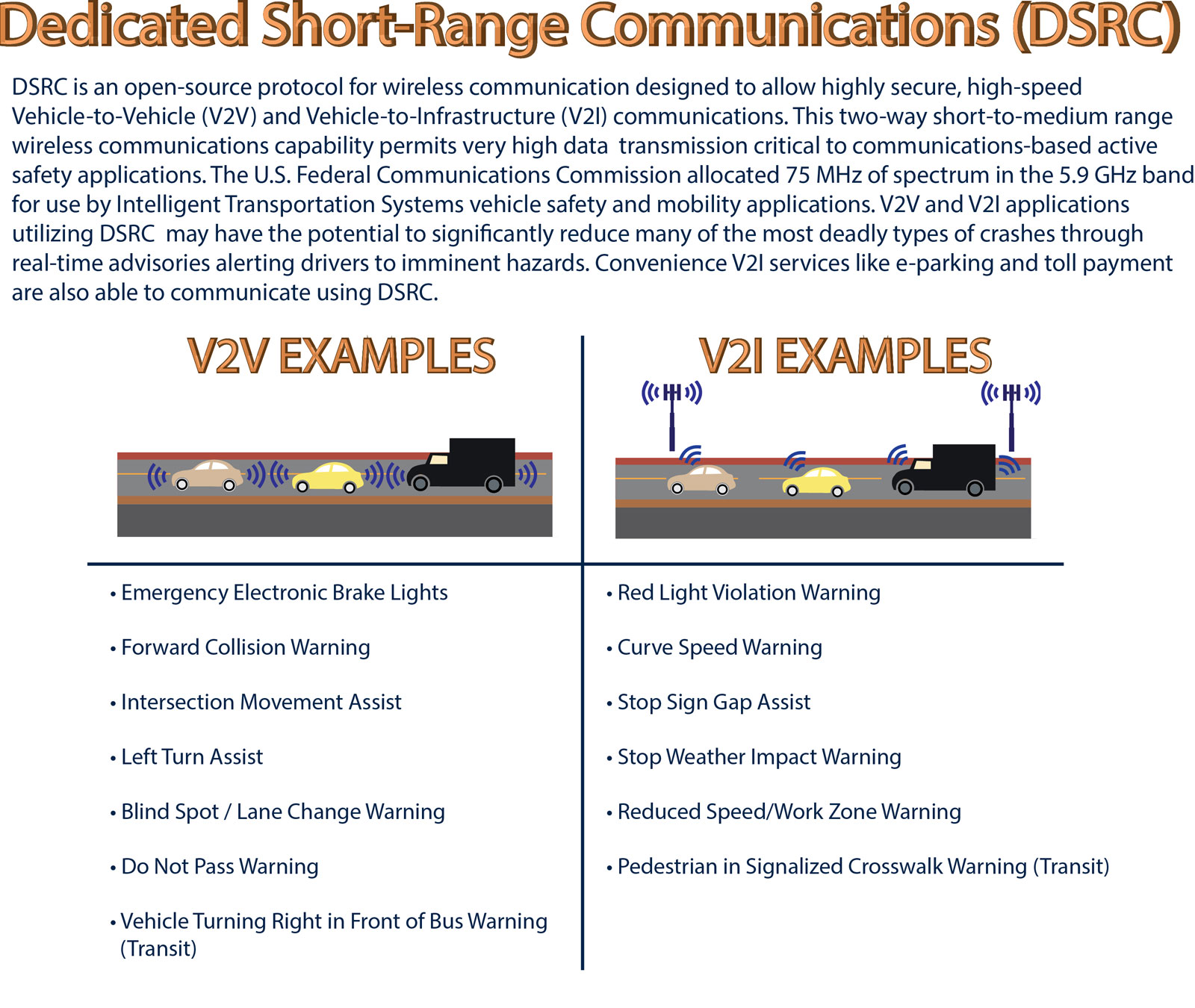
Connected and autonomous vehicle (CVAV) technologies have the potential to improve safety, accessibility, and congestion but depending on implementation policies they could also increase pollution, congestion, and inequity. This page provides basic information about CVAVs and highlights local and state projects and initiatives.
Levels of Driving Automation Table
Developed by the Society of Automotive Engineers (SAE), the Levels of Automation graphic provides common definitions to facilitate communication focusing on six levels that span from no automation (0) to full automation (5). An important distinction occurs between levels 2 and 3 where the automated driving system takes over the dynamic task of driving. Scroll to view the levels of automation table with descriptions and examples or view the infographic table PDF.
| SAE Level | Name / Definition | Steering, Acceleration, Deceleration | Monitoring Driving Environment | Fallback Performance of Dynamic Driving Task | System Capability (Driving Modes) | Time-Frame |
| 0 | No Automation The full-time performance by the human driver of all aspects of the dynamic driving task, even when enhanced by warning or intervention systems. | Human control | Human control | Human control | N/A | NOW |
| 1 | Driver Assistance The driving mode-specific execution by a driver assistance system of either steering or acceleration / deceleration using information about the driving environment and with the expectation that the human driver perform all remaining aspects of the dynamic driving task. | Human and Automated control | Human control | Human control | Some Driving Modes | NOW |
| 2 | Partial Automation The driving mode-specific execution by one or more driver assistance systems of both steering and acceleration / deceleration using information about the driving environment and with the expectation that the human driver perform all remaining aspects of the dynamic driving task. | Automated control | Human control | Human control | Some Driving Modes | 2013+ |
| 3 | Conditional Automation The driving mode-specific performance by an automated driving system of all aspects of the dynamic driving task, with the expectation that the human driver will respond appropriately to a request to intervene. | Automated control | Automated control | Human control | Some Driving Modes | 2020+ |
| 4 | High Automation The driving mode-specific performance by an automated driving system of all aspects of the dynamic driving task, even if a human driver does not respond appropriately to a request to intervene. | Automated control | Automated control | Automated control | Some Driving Modes | 2020+? |
| 5 | Full Automation The full-time performance by an automated driving system of all aspects of the dynamic driving task under all roadway and environmental conditions that can be managed by a human driver. | Automated control | Automated control | Automated control | All Driving Modes | 2025+? |
| Source: Adapted from Society of Automotive Engineers (SAE) Standard J3016, SAE International 2014 | ||||||
CVAV Resources
Learn the basics and technology, as well as updates on CVAV initiatives with the resources linked below.
State & Local Developments
This section highlights state and local initiatives and will be updated regularly with new developments.
- Drive Ohio highlights Ohio DOT efforts to design, test and deploy smart mobility technologies.
- I-70 Truck Automation Corridor
- Inventory of Shared Mobility Services in the Dayton Region.
- Follow Columbus’s efforts as the city implements the U.S. DOT Smart City grant.
- GDRTA Connect is Greater Dayton RTA’s effort to improve mobility in the Miami Valley through the use of smart technologies.
- Governor Kasich Signs Executive Order to Encourage More Autonomous Vehicle Testing
Basics
Basic information about how connected and autonomous vehicles work, their benefits, and enabling legislation
Technology
Basic information about existing and emerging technologies related to connected and autonomous vehicles.
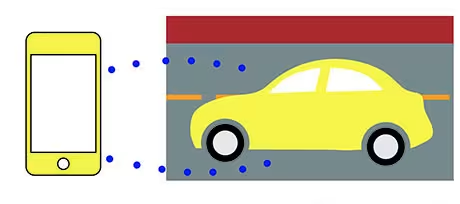
Transportation Network Companies (TNC), also known as Mobility Service Providers (MSP) or ride-hailing services, match passengers with drivers via websites and mobile apps.
|
Image
|
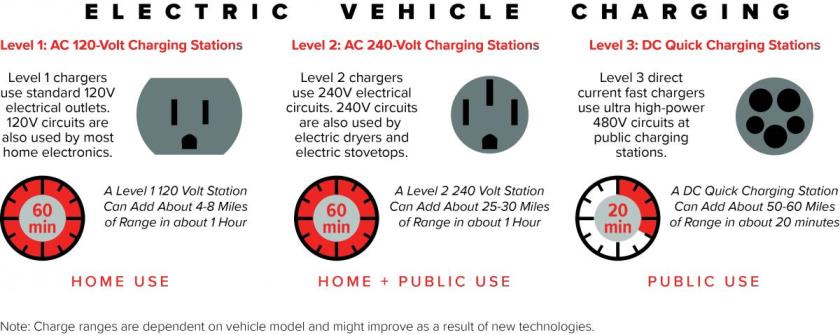
Electric Vehicle Charging infographic